
Determining the length of an edge ring
Forum Archive › Determining the length of an edge ring
- This topic has 8 replies, 4 voices, and was last updated 1 year, 7 months ago by
Leo.
-
AuthorPosts
-
January 11, 2025 at 11:03 am #19529
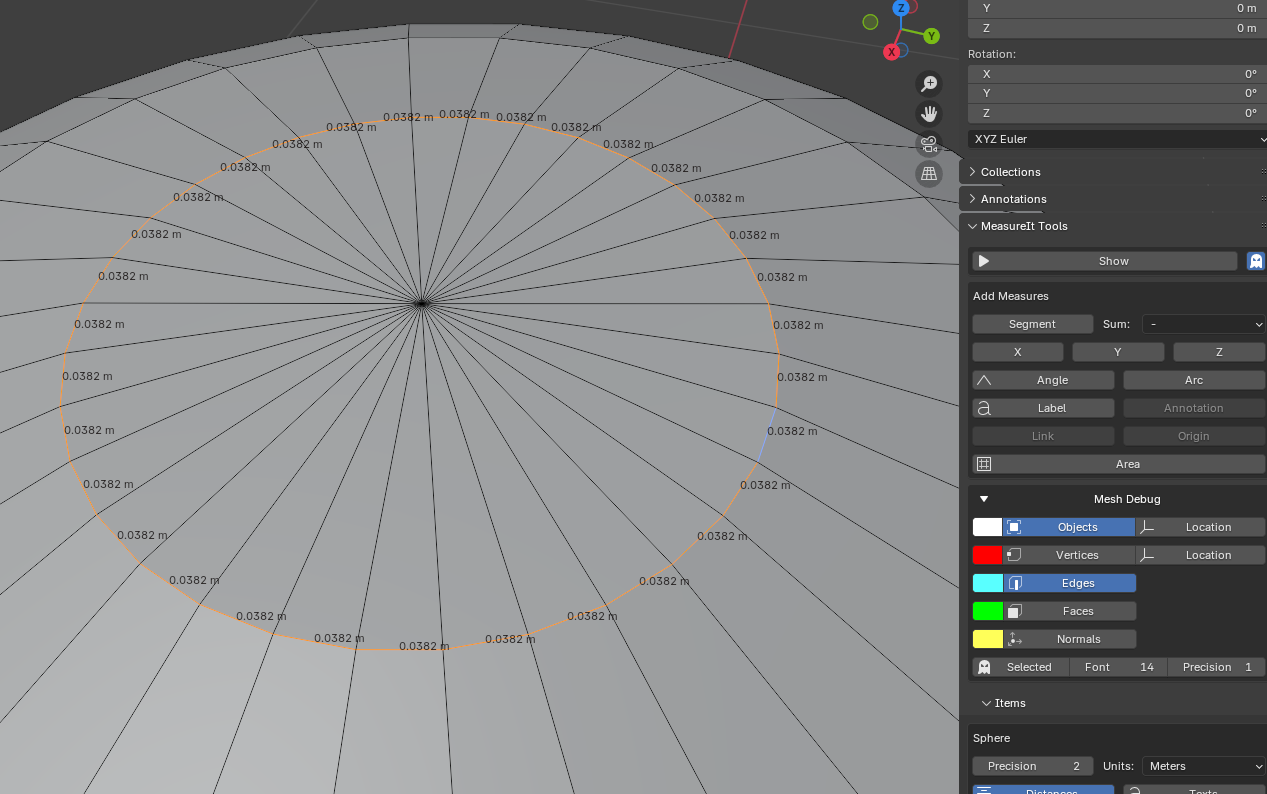
Stupid question, but can you display the entire length/radius of a ring? I can only find the option to display the individual sections. I have already tried something with MeasureIT but no succes. Thanks
 January 11, 2025 at 11:41 am #92613
HI Leo,
You could Select that Edge Loop, P > Separate > Selection. Switch to Object Mode and Select the new Object and Add a little GN tree like this:
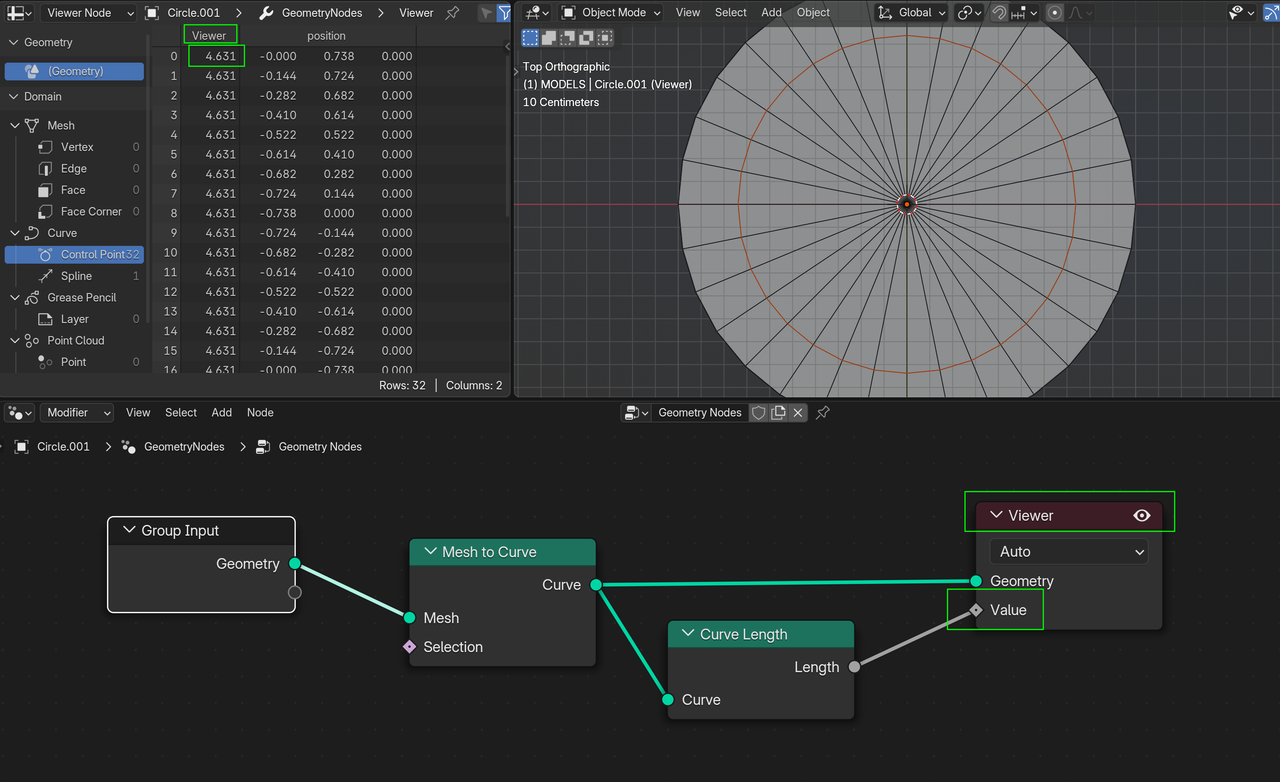
If I remember correctly, Python also has access to the Length of Curves…
January 11, 2025 at 2:30 pm #92614Thank you Martin for your help. I thought there was a quick/direct solution that I overlooked but this definitely helps. Thank you
January 11, 2025 at 2:30 pm #92615…come to think of it, if you’re going to use Python, you could simply add all the Edge Lengths of the Selected Edges. That’ll probably be faster than to first Convert them to a Curve.
January 11, 2025 at 2:32 pm #92616Maybe there already exists an Addon that does something like that…I don’t know.
January 11, 2025 at 2:35 pm #92617And there is this old post, that says you can use MeasureIt for that: https://blender.stackexchange.com/questions/1674/how-to-get-selected-edges-length
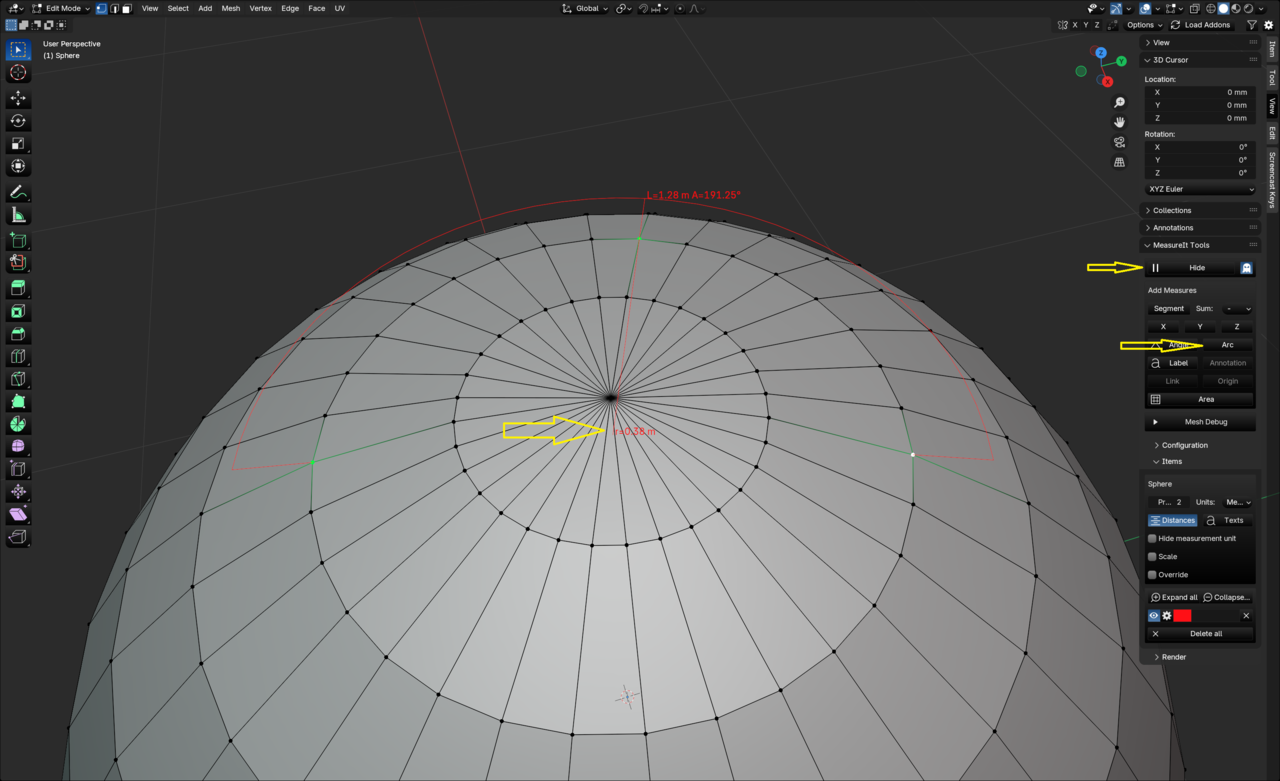
January 11, 2025 at 2:51 pm #92618If you want the radius of a ring like that you can use the MeasureIt extension:
You’ll have to go into vertex mode and select three vertices on the ring you want to measure and then in the extension (under view in the n-panel) click on “Arc”. It will the show the radius, length and angle of the arc. Make sure you click on “show” in the extension, otherwise you won’t see anything.
 January 11, 2025 at 3:09 pm #92619
If you want to go the python route:
import bpy
# Get the active object
obj = bpy.context.active_object
# Check if the object is a mesh
if obj.type == 'MESH':
    # Enter edit mode
    bpy.ops.object.mode_set(mode='EDIT')
    total_length = 0
    # Get the selected edges
    edges = [e for e in obj.data.edges if e.select]
    # Calculate the length of each selected edge
    for edge in edges:
        v1 = obj.data.vertices[edge.vertices[0]].co
        v2 = obj.data.vertices[edge.vertices[1]].co
        length = (v2 - v1).length
        #add the edge lengths together
        total_length = total_length+length
    #Print the total length to the console
    print(f"Total length: {total_length}")
This will output the total length of selected edges. I don’t know why but for some reason you have to go to object mode and back into edit mode for blender to detect the change to the selected edges. It’s probably because of my method of determining selected edges. It’s the only thing I could come up with. So, I added a mode set to edit. This way you can just select your edges tab to object mode and run the script. Now that I’m typing this I could have just switched to object mode instead. I think.
bpy.ops.object.mode_set(mode='OBJECT')
I haven’t tested that. The script does work in object mode. For windows user to access the console click windows->Toggle System Console. For Linux user you can add “-con” without the quotes after running ./blender in the terminal or if you have a menu item or desktop icon you can check run in terminal for the launchers properties. Sorry, Mac people I don’t know on Mac, but I do know you can use the -con in terminal mode.
***Edit*** It works. So here is the change so you don’t have to tab to object mode.
import bpy
# Get the active object
obj = bpy.context.active_object
# Check if the object is a mesh
if obj.type == 'MESH':
    # Enter edit mode
    bpy.ops.object.mode_set(mode='OBJECT')
    bpy.ops.object.mode_set(mode='EDIT')
    total_length = 0
    # Get the selected edges
    edges = [e for e in obj.data.edges if e.select]
    # Calculate the length of each selected edge
    for edge in edges:
        v1 = obj.data.vertices[edge.vertices[0]].co
        v2 = obj.data.vertices[edge.vertices[1]].co
        length = (v2 - v1).length
        #add the edge lengths together
        total_length = total_length+length
    #Print the total length to the console
    print(f"Total length: {total_length}")
January 11, 2025 at 3:23 pm #92620Thanks for all the help and feedback. You are the best
-
AuthorPosts


- The topic ‘Determining the length of an edge ring’ is closed to new replies.