
Reply To: COLLAB2021 – HQ – Stylized Fantasy Environment
Forum Archive › COLLAB2021 – HQ – Stylized Fantasy Environment › Reply To: COLLAB2021 – HQ – Stylized Fantasy Environment

If data linking does increase poly-related performance, does this translate to other environments? For example, can you export to Unity in a way that the data-linked geometry is functioning as multiple copies of the same base object? Or would you have to use a different method to have this translate properly?
@lexicolopolis , Simply put you would use a different method. In your image you would model your 4 stones in Blender and optimize those 4 stones with details such as with normal maps, then import 4 stones into Unity and the linking for what, 20 stones, would be done in Unity. It’s called a prefab in Unity. From your 4 stones you make 4 prefabs one for each, then you add the prefabs to the scene and duplicate, rotate and scale the prefab.
Just looking at your image you could go as low as maybe 48 verts for the wall part.
May I suggest a different approach.

This is a basic silhouette shape of the wall the rest of the detail for each stone could then be sculpted, you may wish to add a little more detail first like this.
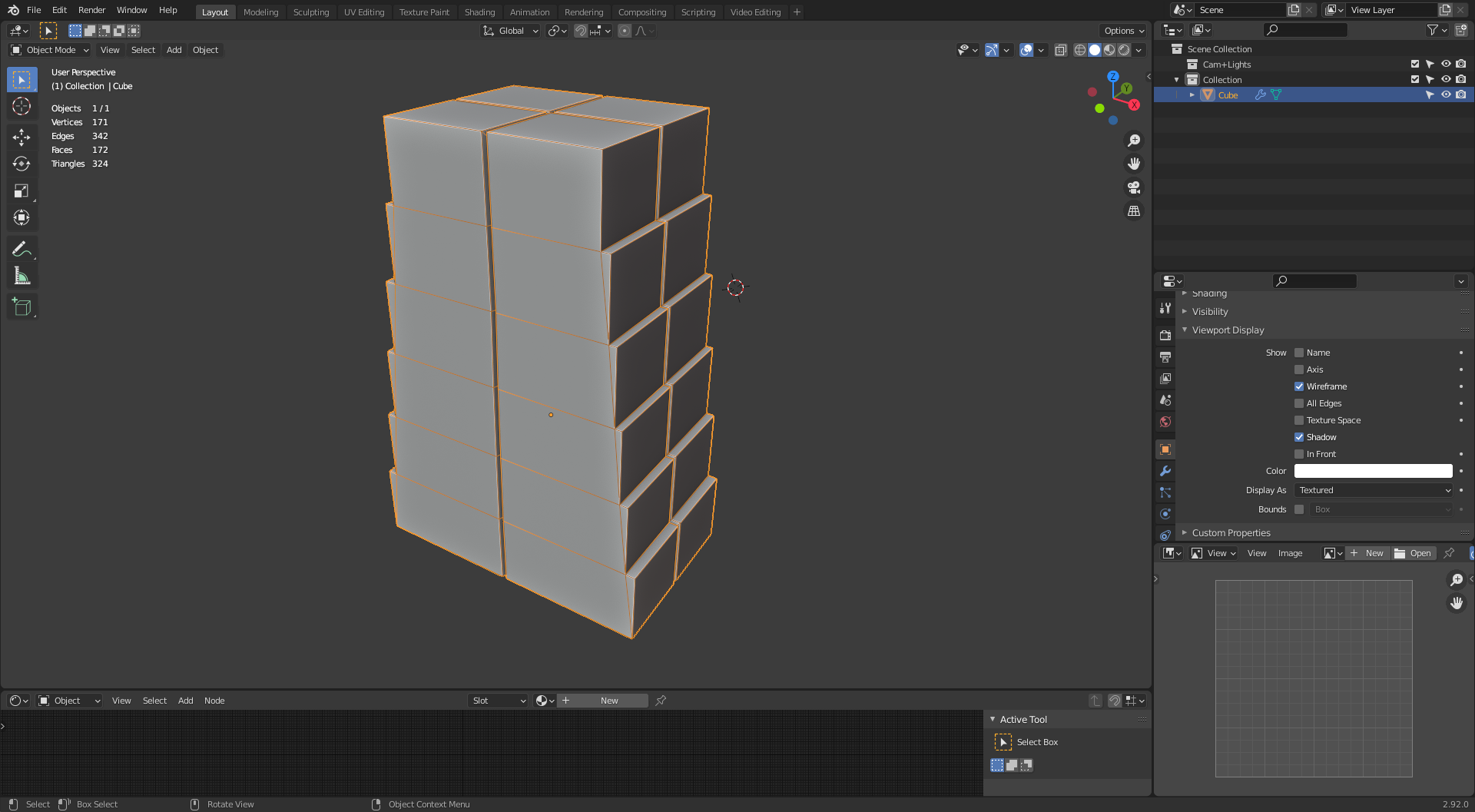
This gives 171 verts, then you would duplicate this mesh sculpt detail then bake the detail to the original, it would be much faster workflow than stacking stones then deleting all those internal faces that will never be seen. Now that would be optimized. I just noticed I haven’t left space for the metal part but you get the idea.