
Reply To: COLLAB2021 – WIP – raisonhomme
Forum Archive › COLLAB2021 – WIP – raisonhomme › Reply To: COLLAB2021 – WIP – raisonhomme

I’m late to the blender crowd – I started in 2019 with blenderguru’s donut. During the last chapters of the donut tutorial Andrew was going kind of nuts. I wondered – why does he obsess so much about the details? Now that I’m on the first project “in freefall” I find myself obsessing about small details, although most of the time not in front of a computer. Here’s my story of the obsession.
1. Taking things to literally
My first failed attempt at the top is due to the name of the task: It was called ivy, thus I looked up reference images on ivy and even took photos of ivy outside.

Then it dawned on me: This looks nothing like Vadim’s artwork! There’s tons of geometry in the real world! It’s all over the place! There’s sharp and pointy edges everywhere! The leaves have bright veins! None of this is in Vadim’s artwork. I could not get satisfactory results trying to emulate something that is not in the original. So we’re in some kind of fantasy world, thus I figured I can create a fantasy plant that looks more like Vadim’s artwork. The plant he chose is closer to the leaf of a sea rose, roundish and oval shapes abound.
2. Emulating Line of Balance in 3D
But there’s more to consider. I could not get a decent silhouette with randomized particle systems. The silhouette follows a rule that ink artist Alphonso Dunn calls “the secret line of balance”.
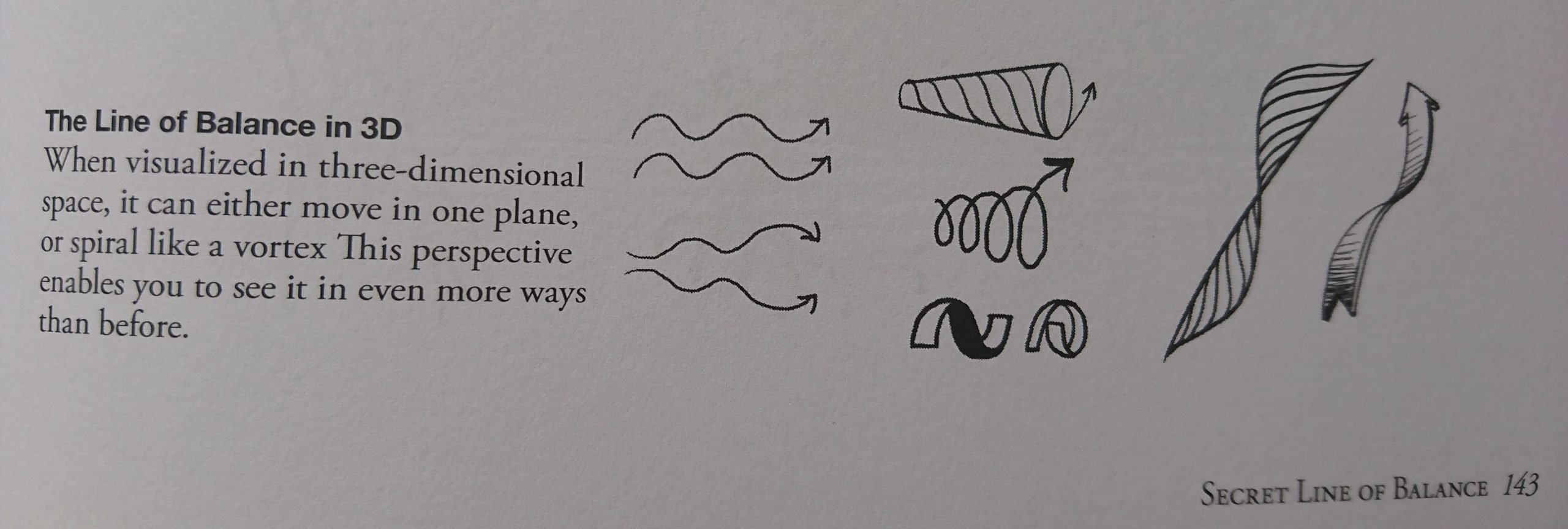
It is about lines and shapes which always follow one direction and then gently push to the opposite side. This what the secret line of balance looks like in Vadim’s artwork:
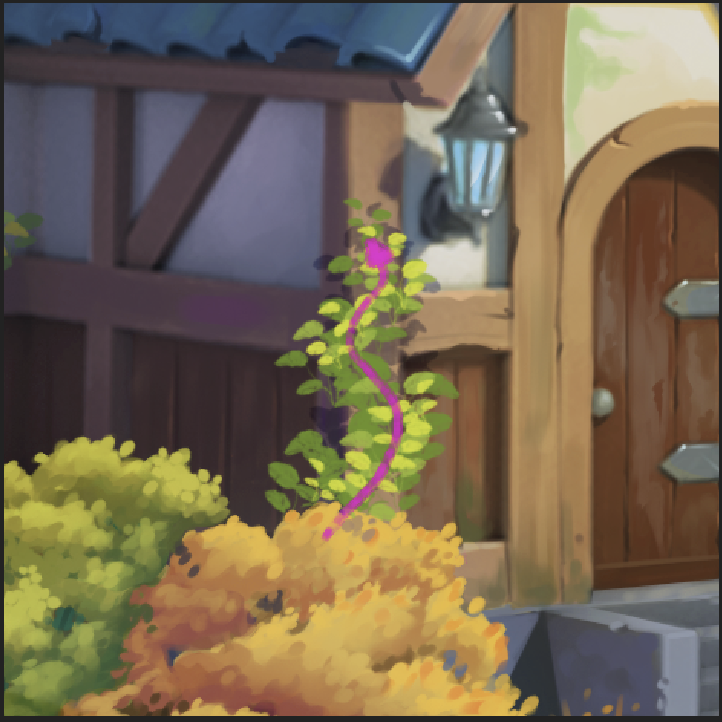
I realized that I wouldn’t be able to recreate this wonderful silhouette without manual labour. Particle systems wouldn’t do. Furthermore, individual leaves should be visible and layered. Although many plants in the scene are rather “mushy” individual leaves heighten the appeal of the house. A green cloudy thing wouldn’t to the job.
So I decided to go for hand-painted alpha cards. Alle leaves will be one material on which I push the UVs around.
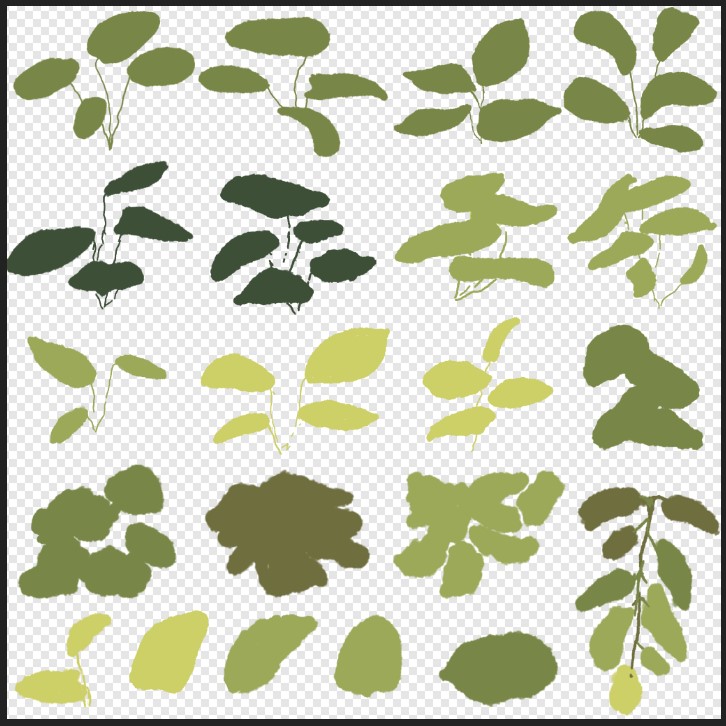
I took a fuzzy brush in affinity and created clusters of leaves (just like Vadim did – you can see the repetition of his smart brush. There are clusters for the background. I picked most of the colors from the lit parts in the foreground.
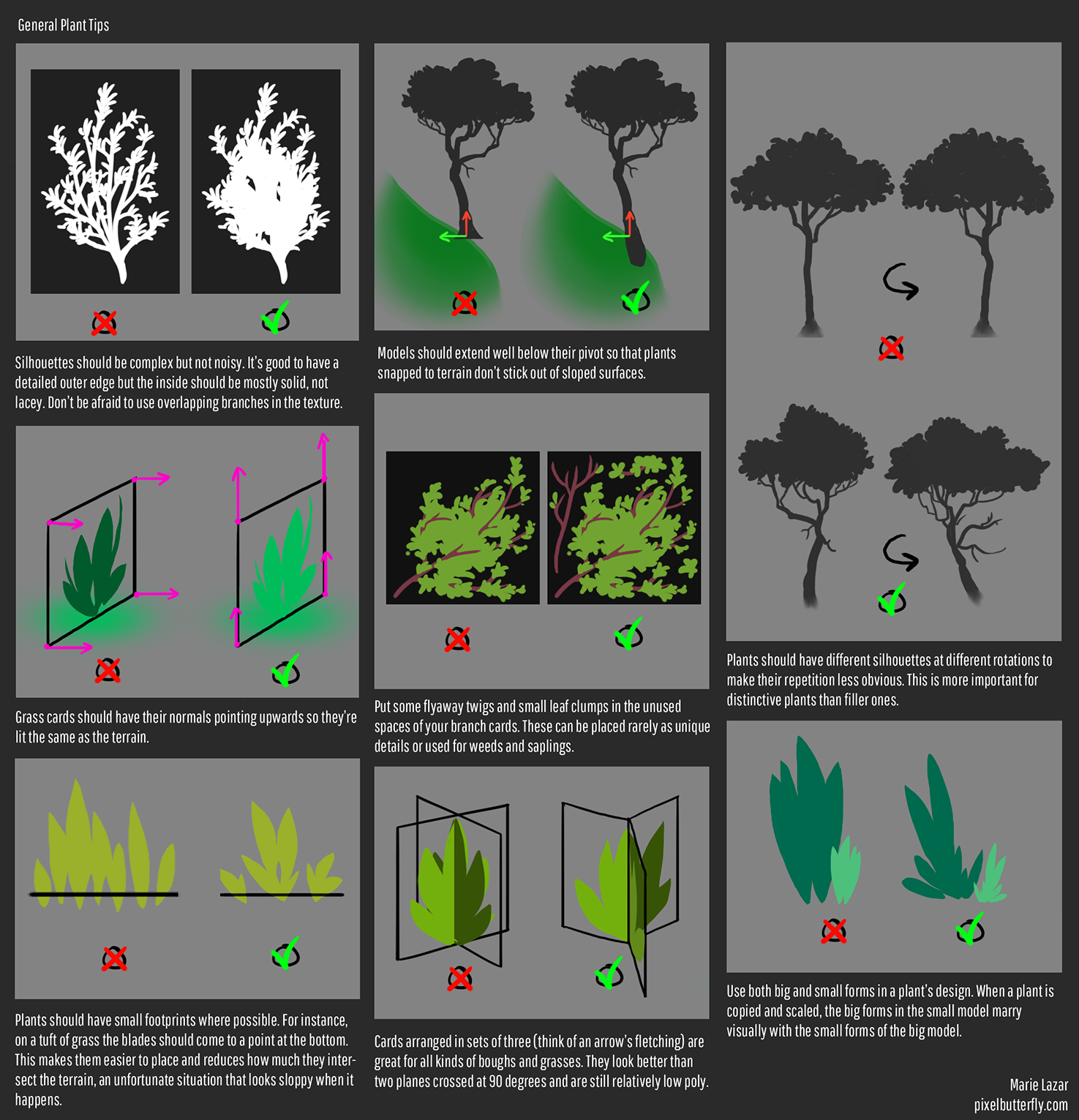
I took advice from Marie Lazar’s excellent blog entry on creating stylized plants and used some spare space for individual leaves that help for emulating the same “line-of-balance-silhouette” of Vadim’s artwork.
3. Let’s paint
Not quite happy with the blandness of the texture, I inserted some highlights on a different layer. If these highlights turn out to be clashing with the rest of the artwork I can return to the bland versions.
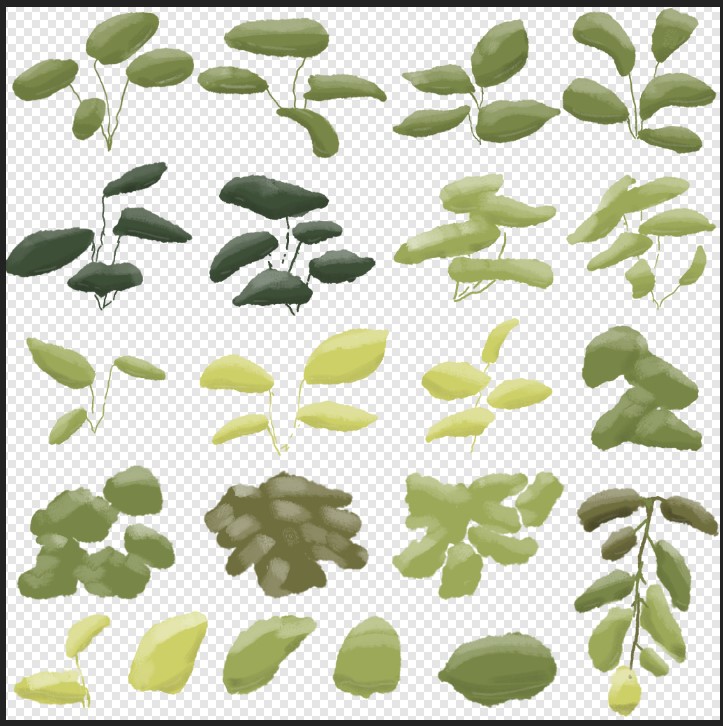
The goal for our project is to have a painterly style and yet – the leaves should have physical properties. I went about this Ian Hubert style and did a slapdash roughness map. The idea is that the roughness is lowest in the middle of the leaf where many plants feature a shiny stem.
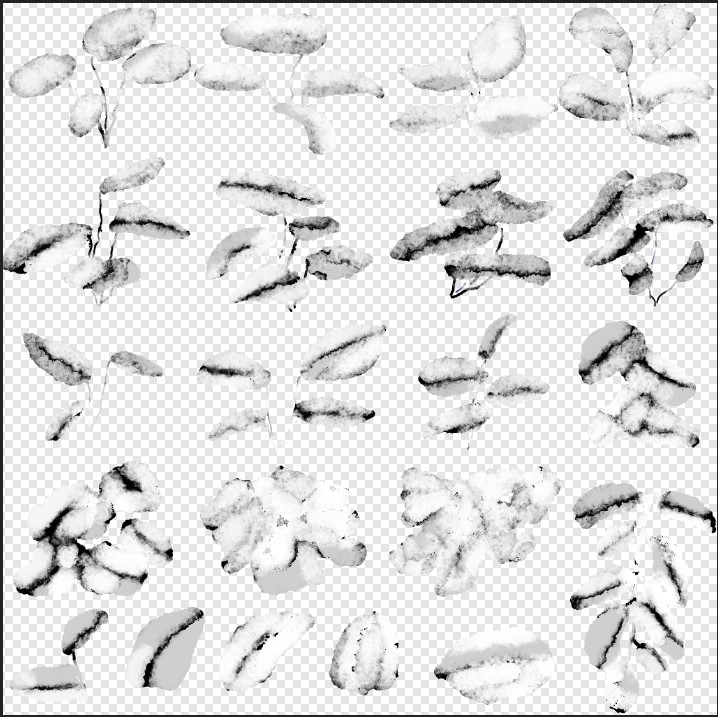
I keep the effect subtle on the dials.
4. Going Unreal
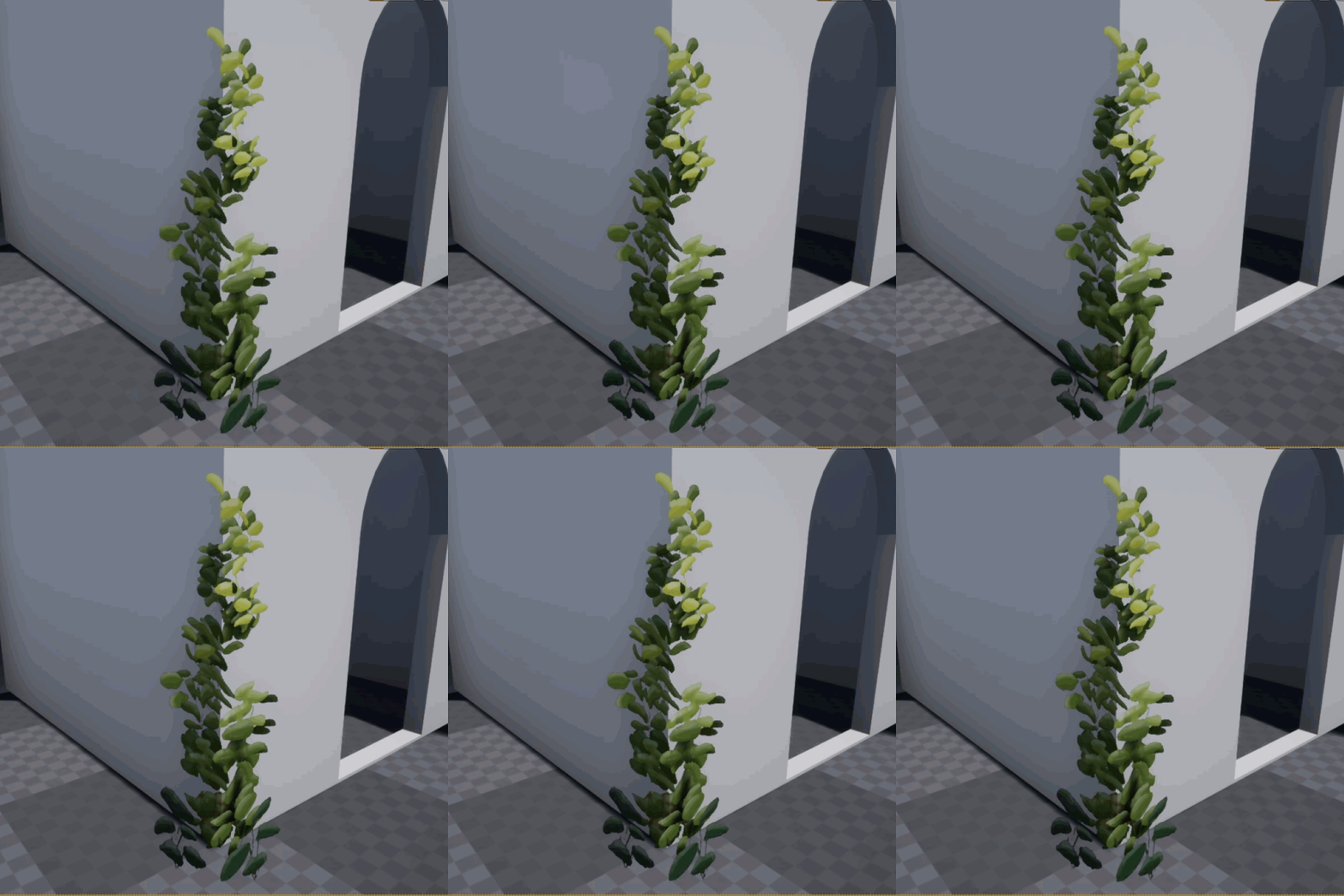
The entirety of the first ivyish plant consists of roughly 40 cards, which makes it very low poly! I joined the project, because I want to become an environment designer for game engines. When I saw the project outline I thought right away of those games where the environment is the star, such as Firewatch or The Long Dark. I wanted to do the vines because I realized that the details of the environment can be harder to do than the landmarks. When Vadim asked in our chat if we could take this to Unreal I went – YES! – that’s what I had in mind. Exploring such a dreamy world personally is great. My competitor is a far more proficient blenderer than I, so I decided that I focus on an asset that would go well with a game engine. His work will certainly be better for a render but this could be useful if we extend this into an Unreal project. (What is CGCookie doing with that Epic Megagrant anyhow?) 😉
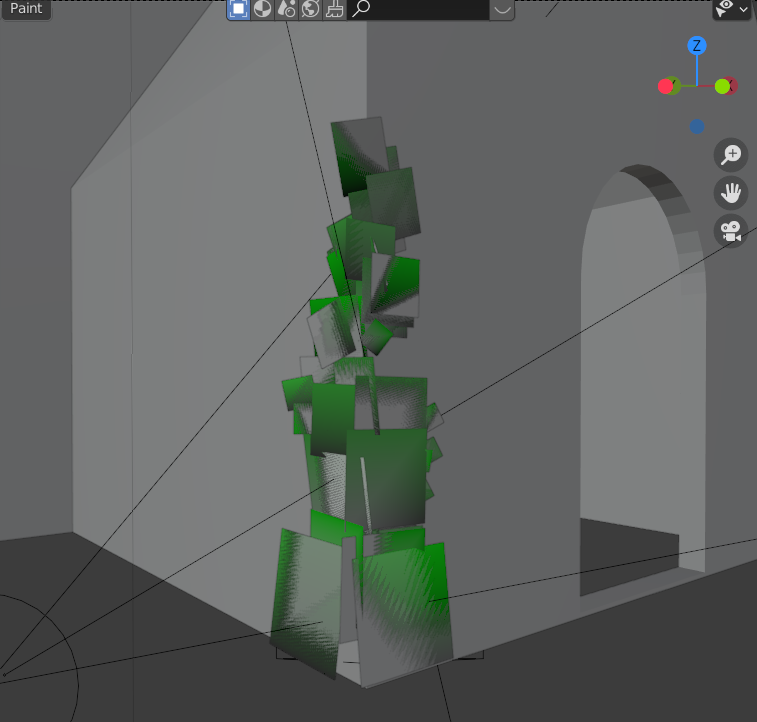
In order to have some random movement in Unreal I randomly painted some vertices on the green channel (chosen randomly) whilst favoring the upper parts of the vine cards.
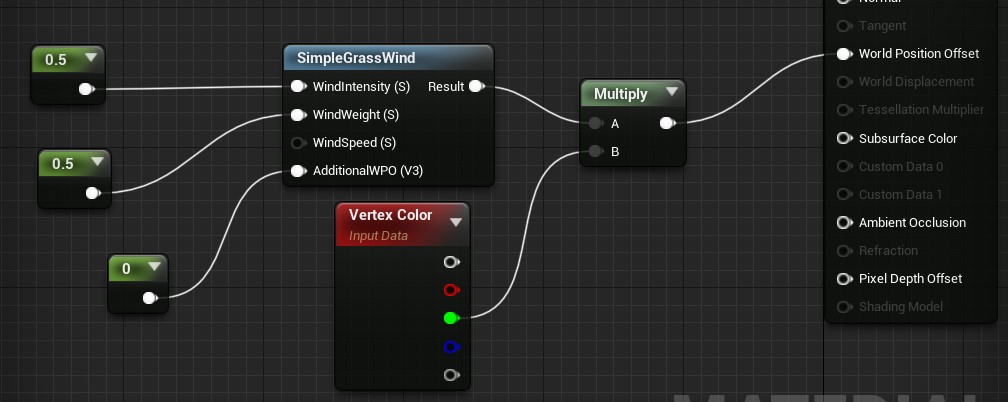
Coming from blender node-fun is to be had in Unreal. The green vertex channel drives the displacement animation. So only green vertices are being “shoved around” more in the wind. And there it is shaking gently in the wind! Vines don’t move like that? So what?! – They don’t grow on wooden beams only either!
This project is fun!