
Reply To: Question in regards to diverse methods of retopology & advantages + disadvantages
Forum Archive › Question in regards to diverse methods of retopology & advantages + disadvantages › Reply To: Question in regards to diverse methods of retopology & advantages + disadvantages

Hi Kimberly – First I want to say how impressed I am that you’re diving so deep into topology. You’re clearly very driven and that’s going to take you far!
Now, my most to-the-point advice: Don’t take topology too seriously. It’s not as consequential as your average modeler makes it seem.
The topology revolution was ignited in 1998 by Bay Raitt, famous for modeling Gollum in LotR with subdivision instead of NURBs. From Jurassic Park to Gollum’s initial design, NURBs was standard. Bay Raitt demonstrated how subdivision technology could be more effective for digital characters, giving rise to the importance of polygonal topology with respect to rigged deformation. This revolution was a big deal and caused the entire industry to transition from NURBs to sub-D workflows.
In its infancy, Sub-D modeling was the wild west. Can we use triangles? What about N-gons. Which direction should key edgeloops run to best deform mouths? Eyes? Shoulders? Knees?
These are the questions you’re battling. But consider this: Bay Raitt didn’t have an internet full of legitimate character wireframes to reference. He had to figure it out by trial and error, which is why he’s somewhat famous for being the first to succeed. At this point in computer graphics, the problematic topological areas like joints and face topologies have long been solved. And it never was rocket science.
Topology is not the complex puzzle that so many new modelers (or modeling teachers) make it out to be. After 20+ years of modeling characters, I’ve NEVER run into a topological issue when my characters are rigged. Is it because I’m a topology master? No! Legitimate, functional topology is really only based on a few key guidelines / principles.
Fewer poloygons means more pressure on topology
Look how low-res Bay Raitt’s 1998 base meshes are (green):
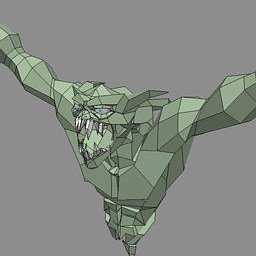
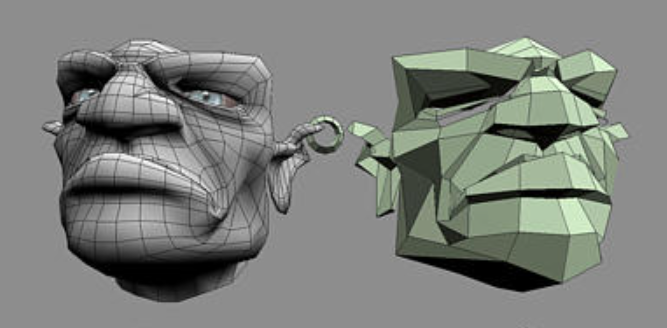
They’re kinda hilariously low. PC’s were much less powerful back then so base meshes (level 0) needed to be super low resolution. No one models base meshes like this anymore, and they haven’t for well over a decade. We can easily afford higher res base meshes. PC’s and software have progressed to the point of supporting millions of polygons fluidly in a viewport, including Blender.
That’s not to say million-poly base meshes are wise. It’s important to strike the balance of a topology that fully supports shape and deformation while still being easily workable. Modern base meshes are commonly modeled more like the level 1 sub-D (gray head above). Notice the higher resolution in the base meshes you posted.
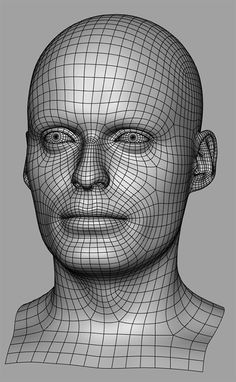
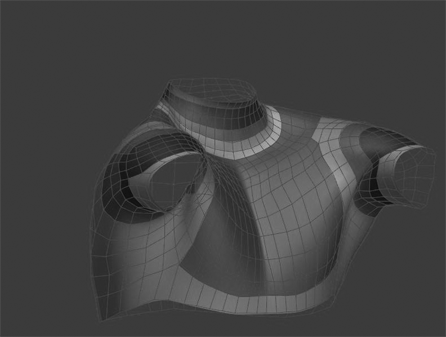
Even the game-res topology (not intended for higher levels of sub-d) is much higher in polycount: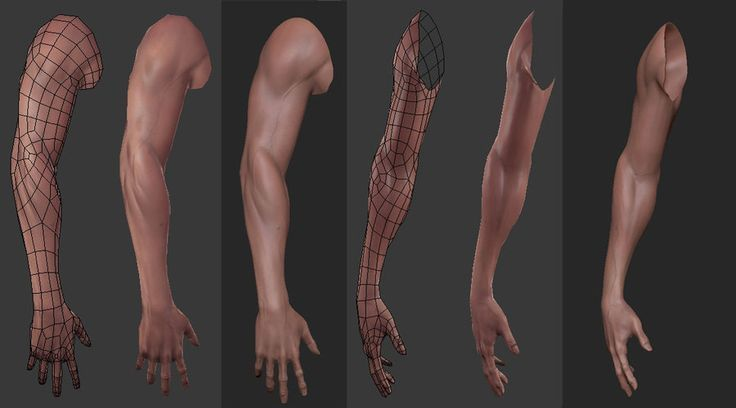
The point is that higher resolution base meshes solve the majority of topology issues inherently. More polygons means less pressure on topology; less chance of causing deformation issues when rigged.
Quads are king
Keep your topology mostly quads and you’ll be fine. Most topological issues are caused by triangles and n-gons in the wrong place. Note that I’m not saying triangles and n-gons cannot be used. Just that they *can* cause issues if placed in the wrong place.
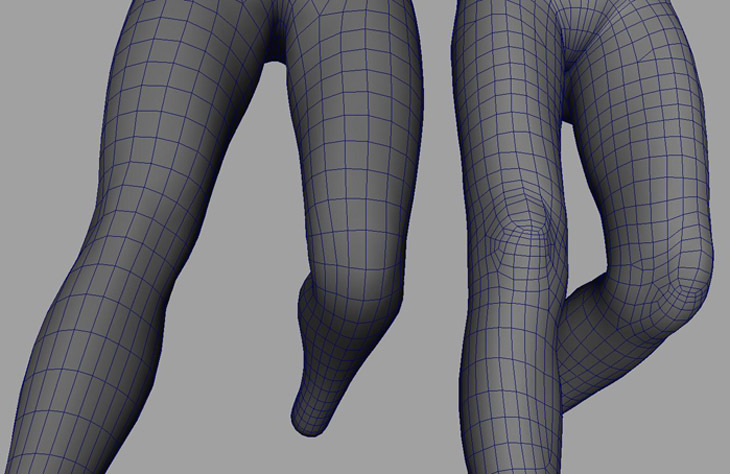
Joints are the most important for deformation on the body (the face is an exception). So shoulders, elbows, wrist, finger joints, knees, ankles. Generally speaking, concentric edge rings will always work fine when you’re modeling for Sub-D (expecting additional levels for rendering). Any additional edge loop splitting (like at the knee) is for building shape into the basemesh, not for deformation success. It’s really not that important in the grand scheme. Both of theses knee topologies are equally valid:
Shoulders can be a little trickier because their deformation is best supported with the pectoral connection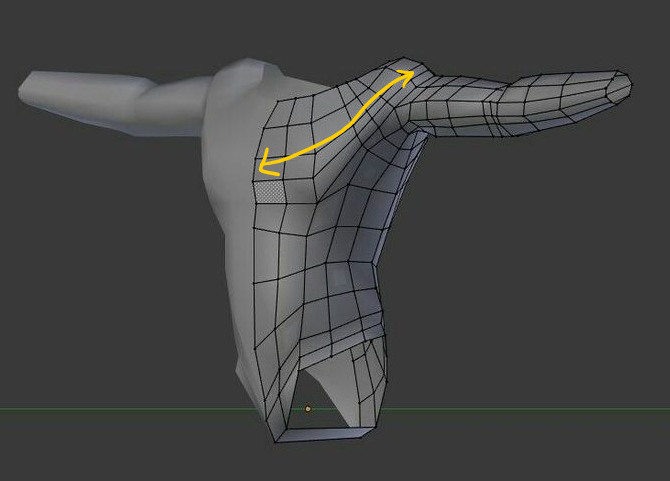
But still, if you break it down, it’s merely a combination of 2 converging series of concentric edge rings with a 5-star junction in the middle: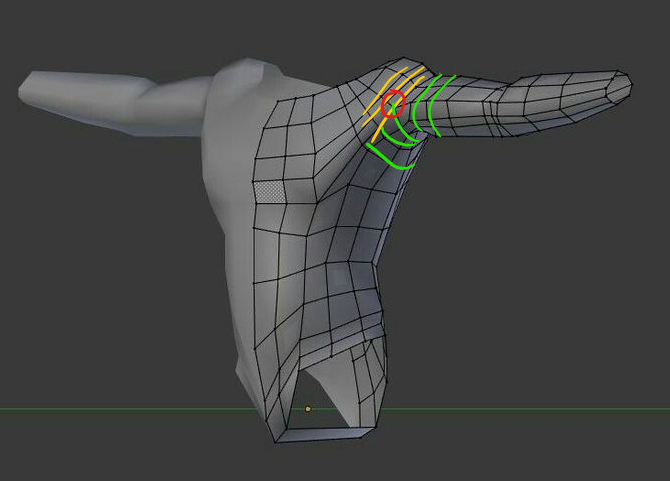
Modelers make a big fuss about junctions too and where they’re OK to exist. Again, I’ve never encountered a show-stopping issue with 5+ star junctions when any of my character models have been rigged. My rule: 5-stars are unavoidable and have never caused a memorable issue. 6+ stars are easy enough to avoid and I don’t usually risk including them.
NOTES: Joints can require more specialized topology if you’re modeling a low-poly character for video game in 2001 (or a modern mobile phone game perhaps). But low topology like this is quite rare anymore due to tech advancements.
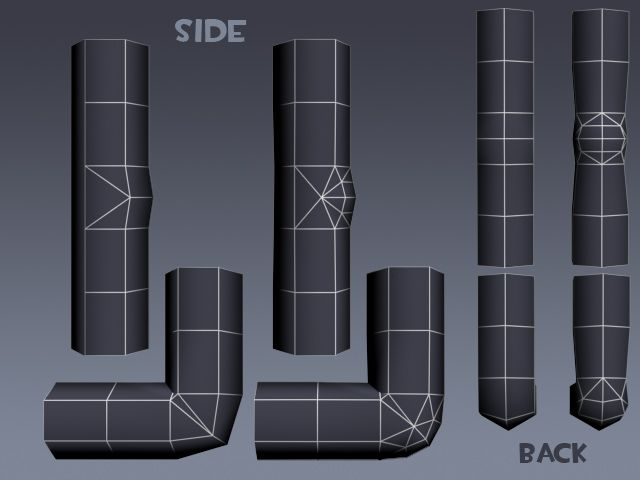
A key distinction about low-poly game topology is that triangles are not only OK, they’re crucial to ensuing minimal polycounts. Keep in mind that many core modeling tools, like cutting edge loops, work best with quads. The more triangles/ngons you have the poorer these tools function.
Quad junctions to remember
I keep only 2 junctions in mind at all times to best support quad-prioritization. What I call the Diamond A) and U-turn (B):
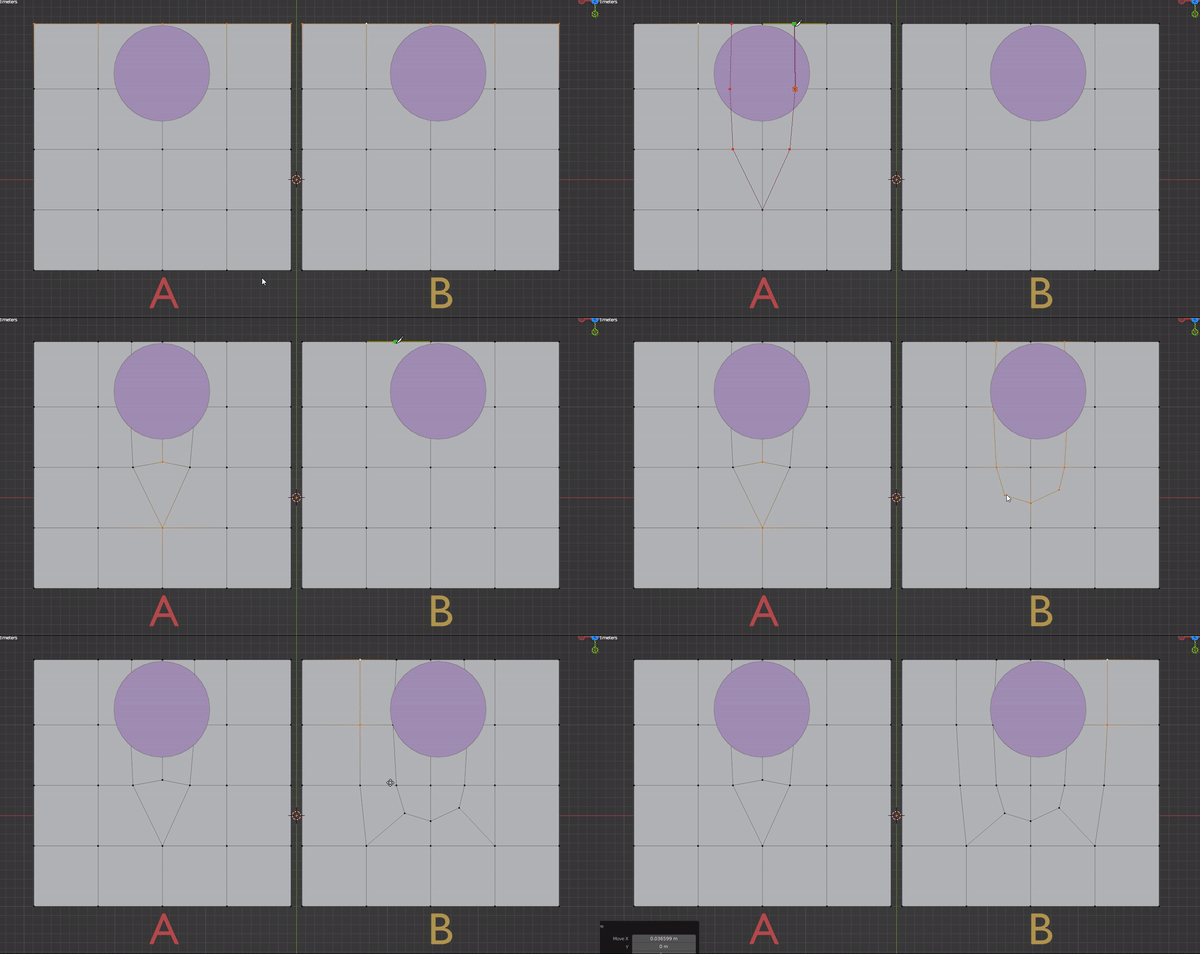
The purple circles represents an area where you need more edges to work with. The diamond (A) is my favorite because it adds less new faces, but the U-turn (B) is just as useful. The diamond takes any single edge and converts it to 3 edges. The U-turn also adds two new edges to the topology in a different way. There’s an added benefit here (not shown in the clip) where you can push your 2 new edges as far apart as needed. Like if you have 2 spots that need another edge, where the diamond’s new edges must be side by side.
If you imagine this process in reverse, higher densities of edges can also be reduced with these same junctions.
The crux of the topology debate
For all the topology Do’s and Don’ts I’ve heard in my 20 years of modeling, I’ve literally never witnessed anyone demonstrating the ‘serious issues’ caused by poor topology. Not in my experience, not from any professor during my time at full sail university, not from any top-professional courses I watched in my early years, not anyone on youtube. Every modeler warns us about them and it commonly puts a LOT of new modelers on edge.
At this point in my career “serious topology issues” feels more like a myth than reality. I’d argue you have to either try for bad topology or avoid referencing all character wireframe examples across the internet. Who does that? The slightest resolve to following the basic principles I (and countless others) have laid out is more than enough to develop reliable character topology skills.
Lastly, your topology looks great! There’s no new topology frontier left to be discovered. Don’t stress or wonder if you’re doing it right any longer 👍