
Reply To: Mirn’s Book of Renders
Forum Archive › Mirn’s Book of Renders › Reply To: Mirn’s Book of Renders

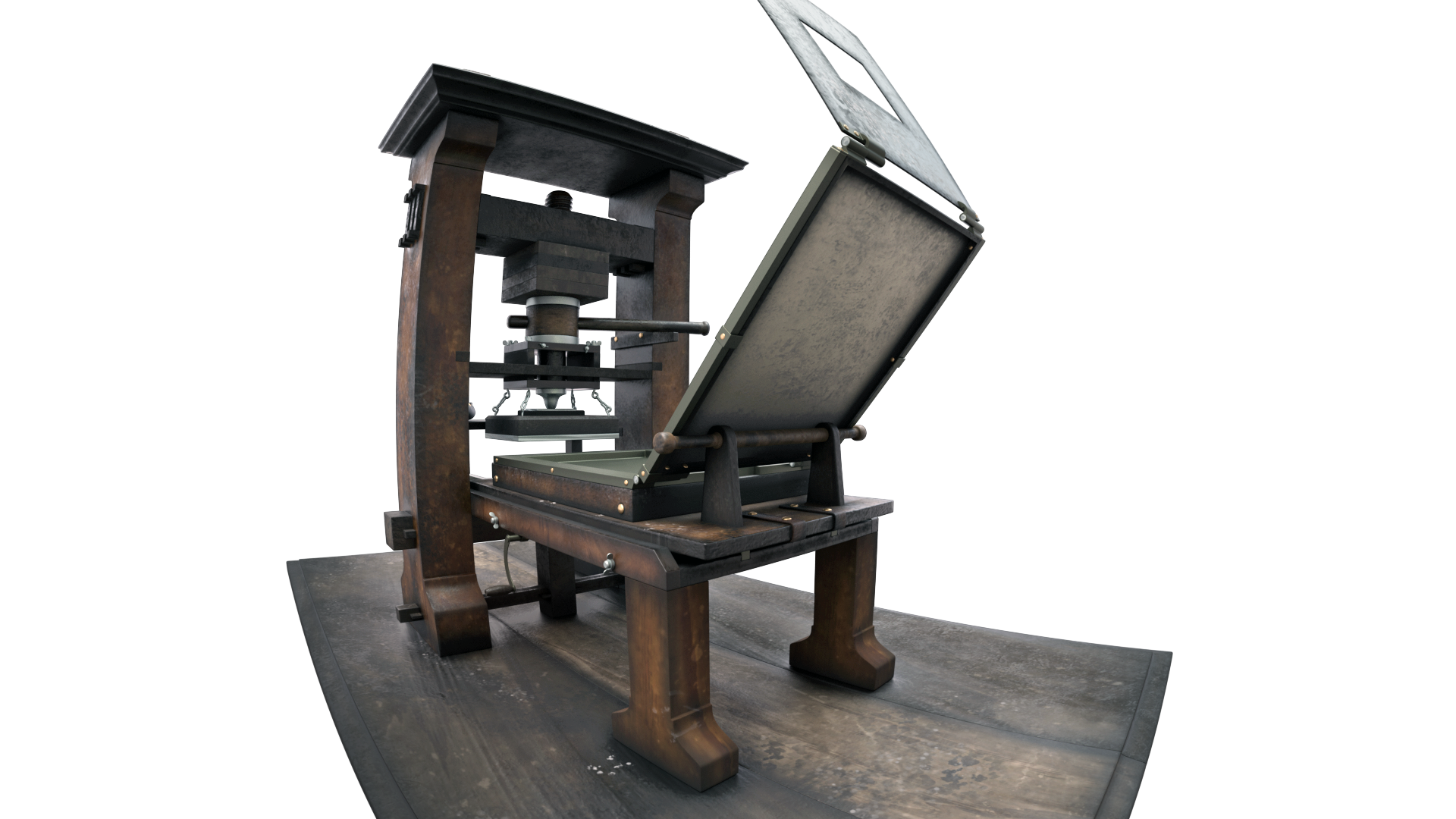
Step 5: it is done. Gutenberg’s press:
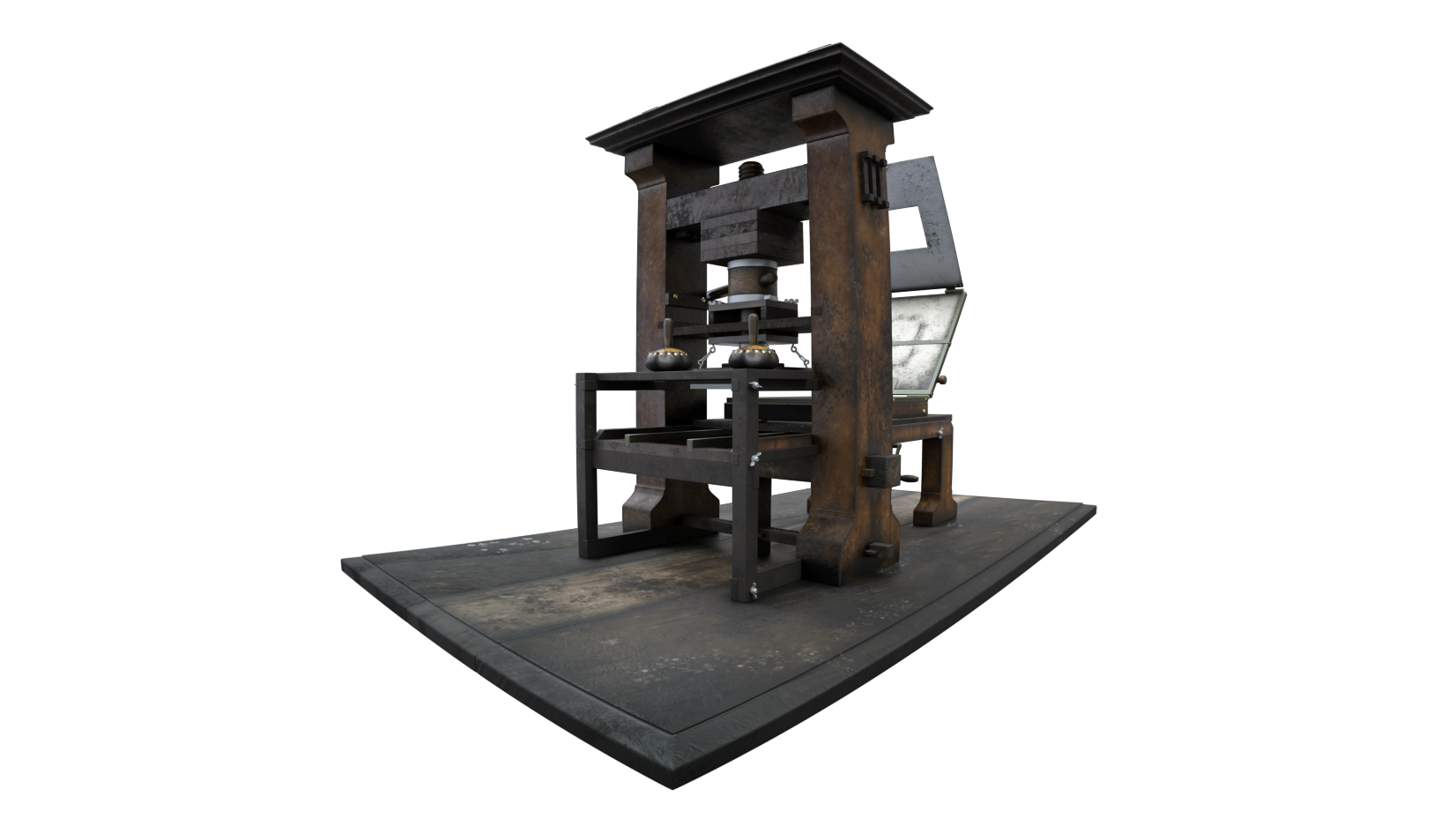
Mirror image transfer is known to mankind since ancient times: Sumerian seals-cylinders, cartouches of the Egyptian pharaohs, coinage.
Printing itself also appeared more than a thousand years ago. The first printed text is the Diamond Sutra, 868.
As early as the 10th century, Chinese typographers used wooden bars with carved hieroglyphs to transfer images to paper. In 1042, the Chinese blacksmith Bi Shen invented typesetting, but the method did not become popular due to the large number of characters needed for typing: more than 40,000.
However, mass printing did not occur until after the advent of the Gutenberg printing press, which was able to combine disparate practices and make printing simple, affordable and cheap.
Johann Gutenberg was born at the beginning of the 15th century (there is no exact data on the birth of the printer). He trained as a jeweler and lived in Strasbourg, making mirrors and polishing precious stones.
According to eyewitnesses, already in 1438, the workshop of Gutenberg was working on the prototype of the printing press.
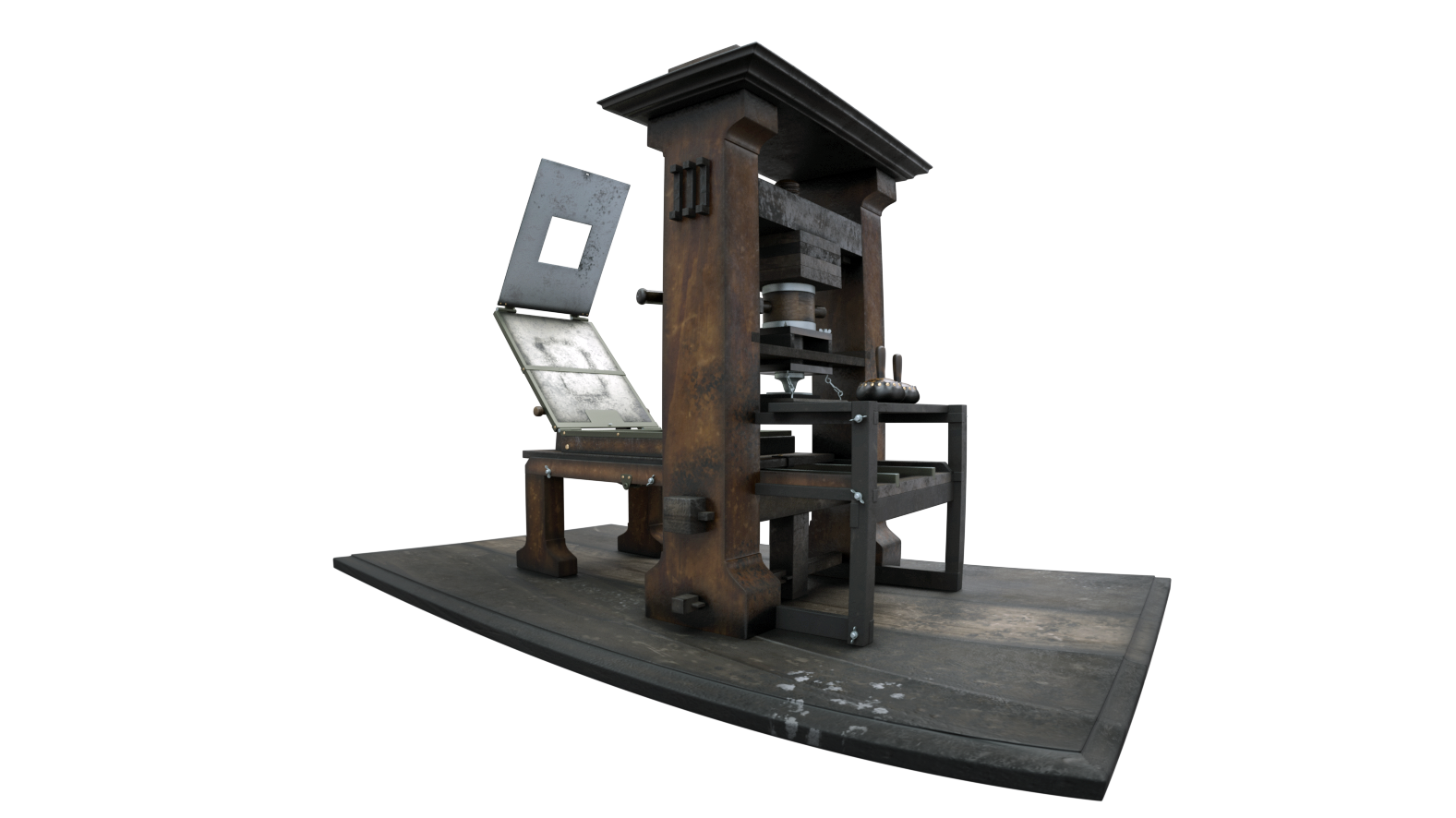
In 1448, Gutenberg moved to Mainz, where he borrowed 1,600 guilders to develop a mechanism whose description was a trade secret.
Lenders have become cousin Johann Arnold Galtus and Mainz merchant Johann Fust.
In the middle of the fifteenth century, the first works of the printing house were published. They were calendars, indulgences, and the Latin grammar of Aelius Donatus. In 1454, Gutenberg’s main book, the Bible, was published. Two folios of 1282 pages with a set of forty-two lines.
In 1455, Johann Fust demanded repayment of the debt with interest and sued Gutenberg.
Peter Schaeffer, Gutenberg’s best printer, testified against the latter in court. According to the court’s decision, the printing house with all the equipment, fonts and Bible set went to Fust.
Fust hired Peter Schaeffer, a former printer of Gutenberg, and from 1457 continued the successful operation of the printing house. Peter Schaeffer married the daughter of Johann Fust; their sons, Johann and Peter the younger, also devoted their lives to printing.
The bankrupt Gutenberg was exiled from Mainz and only three years before his death, the printer was allowed to return to the city. Gutenberg entered the service of the Archbishop of Mainz, Nausaut, and managed to publish several more books.
On 3 February 1468, Johann Gutenberg died in Mainz.
Before the advent of the printing press, books were copied by hand and were the property of the Church and the aristocracy. In medieval Europe, there were about 30,000 books, which were rare artifacts, relics, the property of selected lords.
The Gutenberg printing press made the paper word accessible and significantly accelerated the spread of scientific, secular, and educational literature.